
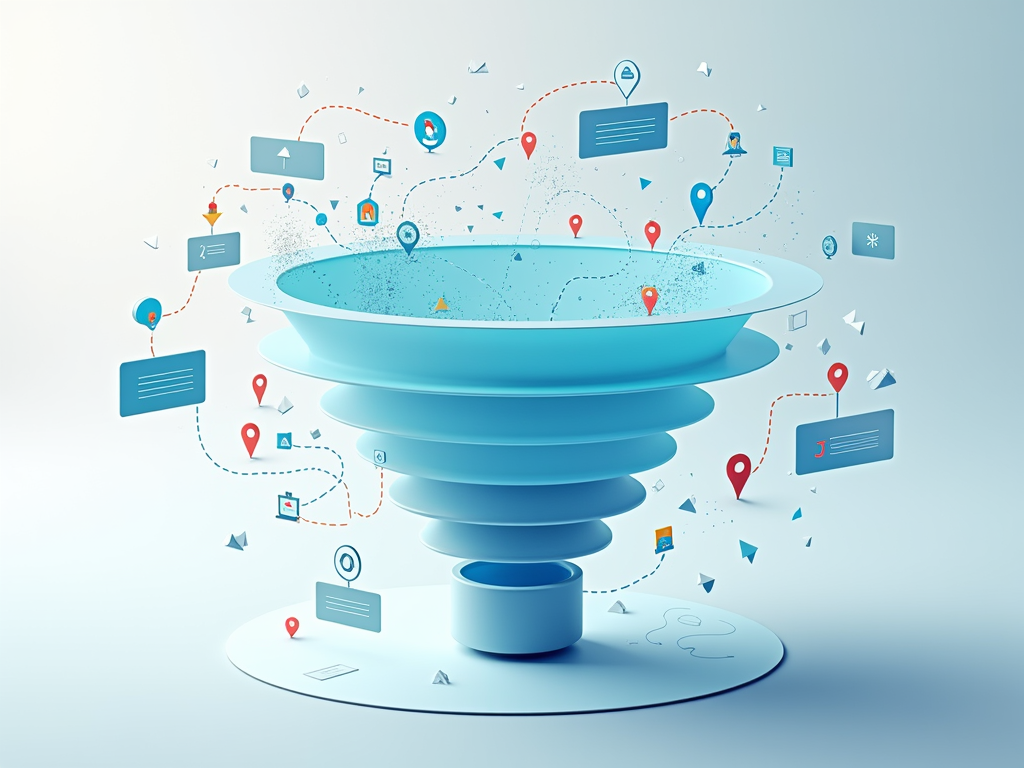
If your leads keep going cold or never move beyond the first touchpoint, your sales pipeline isn’t broken; it’s underdeveloped. The truth is, most leads don’t drop off because they’re not interested. They drop off because they don’t know what to do next.
The journey from someone first hearing about you to becoming a loyal customer isn’t a straight line. It’s more like a winding path, and if that path isn’t clearly marked with the right signs and nudges, people will wander off.
So let’s talk about what that journey really looks like, and more importantly, how to shape it so it runs on its own.
First, Stop Thinking in Stages
You’ve probably seen the classic funnel diagram: awareness at the top, decision at the bottom. And sure, it helps for organising thoughts, but it’s a bit too tidy for how people actually behave.
Real buying journeys don’t move neatly from one stage to the next. People jump ahead, loop back, go quiet, then reappear. They might read something you’ve posted, disappear for a month, and then suddenly book a call after a single email.
If you want your lead journey to work, you need to stop expecting people to behave in order. Instead, design each step with two goals:
- Give value no matter what stage someone’s in
- Make the next action simple and obvious
Let’s break that down.
Awareness: Don’t Just Attract, Qualify
Everyone focuses on traffic. More clicks, more eyeballs. But if you’re only aiming for attention, you’ll fill your funnel with the wrong people. The goal at this stage isn’t just to get seen. It’s to get seen by people who could actually buy from you, not just browse.
This is where message clarity matters. You need to say what you do in a way that attracts the right folks and filters out the rest. If your value proposition is too vague, you’ll get lots of curious lurkers but no real leads.
At the same time, offer something people can interact with, such as a short guide, a punchy insight, or a valuable resource, which helps them self-identify. When they take action, that’s your signal. Not all awareness is equal, and interaction is the difference.
Interest: Now’s the Time to Educate Without Overloading
This is the point where people are circling. They’ve heard of you and maybe seen your content a couple of times, but they’re not sold yet. A lot of businesses fumble here by either saying too little or far too much. The goal is to give them just enough to take a step forward without burying them in detail. Focus on practical insights, honest observations, and sharp questions they might not have considered.
You’re not pitching yet. You’re earning trust. The key is to be helpful, not heavy-handed. Share something they can act on. Create a bit of “aha” – that moment of clarity that makes them want more. This is where proven lead generation strategies to fill your sales pipeline faster make a real difference. It’s not about overwhelming people with options; it’s about guiding them with the right message at the right time.
Consideration: Make the Next Step Feel Natural
By this point, people are weighing up their options. They know you exist, they’re interested, but they need something more before they take the plunge. Now’s when you bring out specifics. You don’t need to overpromise or get flashy. Just show what you offer and why it works. This is where clear, confident messaging does the heavy lifting.
This could be:
- A walkthrough of your process
- Answers to the questions they’re probably wondering but haven’t asked
- Real, results-focused examples (not exaggerated, not name-dropped – just real)
Avoid pressure. What you’re offering should speak for itself. Instead of “sales tactics,” think about giving people what they need to make a smart decision and then letting them make it.
Make the next step really easy to take. If it’s booking a call, that call should be positioned as valuable in its own right, not a hard pitch. If it’s signing up, they should understand exactly what happens next and why it’s worth it.
Action: Remove the Last Bit of Friction
At this stage, it’s less about persuading and more about clearing the path. People are close to committing, but there might still be small things holding them back, such as uncertainty, confusion, or the effort it takes to get started. Your job is to remove that resistance.
Clarify what happens after they say yes. Set clear expectations. Make onboarding effortless. If they have to ask what happens next, something’s off. And don’t assume this is the finish line. It’s the beginning of their experience with you. How smooth and valuable that first experience is will shape what happens next, including whether they stick around, refer others, or buy again.
The Real Win: When the Journey Becomes Self-Sustaining
A good lead journey doesn’t just get someone to buy. It builds a system where every person who moves through it helps fuel the next.
How?
- People who have a clear experience talk about it. That builds awareness.
- Good content shared at the right moment brings in more qualified leads.
- Every smooth handoff builds trust, which shortens the journey for others.
It becomes a loop. Not a funnel that empties out, but a cycle that builds momentum. And the better you design that journey – with clarity, relevance, and zero friction – the more it runs on its own.
Not through guesswork. Not by pushing harder. But because every piece actually earns its place and does its job. That’s how you move from awareness to action, and end up with a pipeline that doesn’t need constant chasing.