
The Role of Professional Staging in Creating Immersive Attendee Experiences
Most event budgets treat staging and lighting as line items to trim when costs run over. That’s a mistake. The physical structure of your stage and the way you light it don’t just make a room look polished, they direct attention, manage crowd behavior, and determine whether an audience feels connected to a presenter or distracted by everything else in the room. Professional production is infrastructure, not decoration.
The Psychology of Elevation
Elevating a stage platform functions beyond just giving the audience a better view. It also serves as a visual cue to all attendees regarding their behavior and level of interaction. A clear hierarchical layout in terms of the position and the elevation on the stage sends unconscious messages to the audience. This subtly informs the audience of the change in the event’s atmosphere from an interactive mode to a presentation mode, without the need for official announcements. It has been proven that people tend to react faster to physical hints rather than verbal ones.
Providing the optimal modular stage platform height has proved very advantageous for events such as concerts. This is because the presenter becomes more visible to the audience and the audience is easily captivated leading to the intended emotional and physical response. In most mid-size ballrooms, this is usually between 24-36 inches. Additionally, it ensures that the performer is in a dominant position and is being looked up to which will give them the confidence to control the stage. Platforms with multiple levels give the audience access to the performer which again is a good thing for interactions. Most performers prefer to be the center of attention with everyone’s eyes on them.
Scale, Proportion, and the "Lost in Space" Problem
Designing a large ballroom event isn’t simply about adding more of everything. More lighting without strategy can be counterproductive by creating dark spots in the room where people are prevented from making connections. More sound can actually be frustrating as people in the back are bombarded with horrible echoes, while the people up front are going deaf.
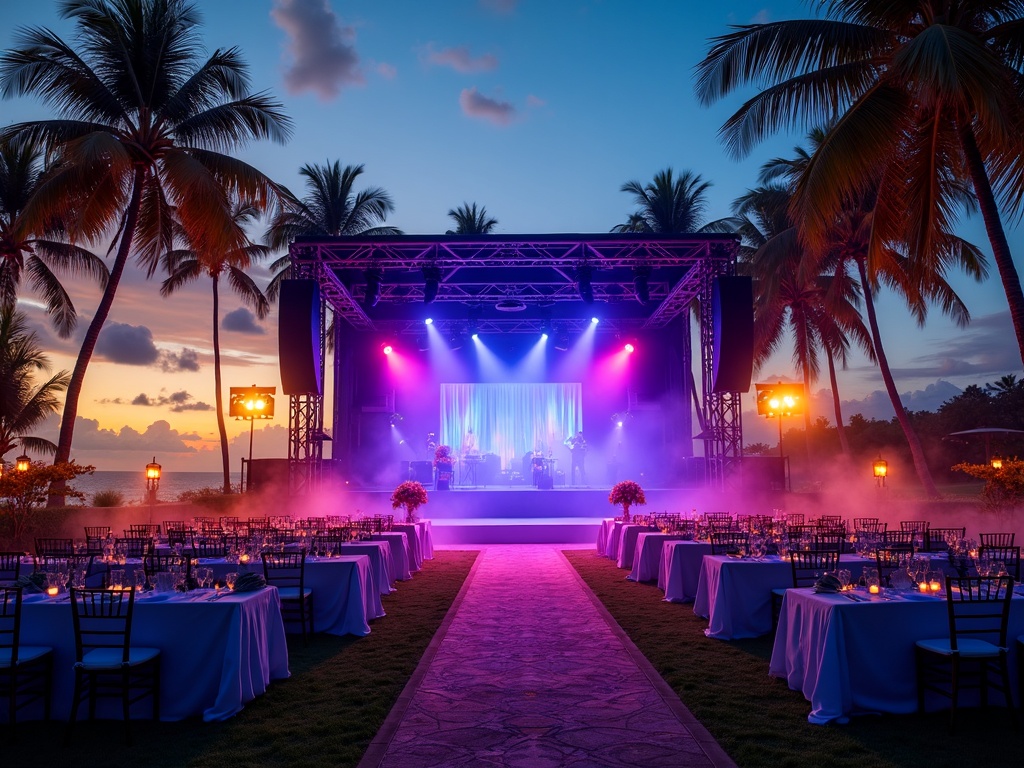
Designing visually and audibly is about guiding the audience to where you want their attention. For destination events in particular, sourcing specialized staging and lighting Hawaii professionals means you’re working with vendors who understand the specific challenges of tropical humidity on equipment, outdoor venue layouts, and the logistics of load-in at locations that aren’t built for large-scale production.
Lighting as a Behavioral Tool
Sophisticated lighting systems, such as moving heads, programmable LEDs, and synchronized wash systems, can help in this regard. These cue an energy shift or transition. You know the next speaker has arrived, and we’re ready to get started. Nothing was said yet, but a lighting transition grabbed your attention, the day is running more quickly.
A too-commonly ignored powerful entry in the subtlety arsenal is floor-level lighting. Reach out to the audience visually by washing light out on to the floor from the stage. Suddenly, it’s not a stage, it’s part of the room, and the people in it get that you’re not just watching a show, you’re right there in it. Energy is indirectly contagious, and that’s the difference between surface-level engagement and the deep down stuff. According to the Event Marketing Institute, 74% of attendees say a high-quality experience makes them more likely to buy the products or services being promoted at the event.
Rigging Safety and the Invisible Work That Matters
A well-run show seems to flow naturally because there are never snags. This starts with solid, planned design. Incorporating the unique load-bearing needs and access challenges of local partners from the stage design phase forward ensures nothing disrupts the flow of your event.
What Planners Should Actually be Asking
It’s not about deciding if you need a stage and lights for your event. It’s about ensuring that the solution you’re investing in addresses your specific issues. Whether it’s an overly spacious venue, a lack of audience engagement, poor visibility for people seated at the back, or your brand story not being effectively communicated, those are the real questions you should be asking.
A professional staging company will inquire about these aspects first, before simply providing you with a quote for the size of the stage. Those who are more interested in the technical details and equipment are simply trying to make a sale based on hardware. On the other hand, those who are interested in understanding your needs and the desired outcomes will design a solution based on the results you are looking to achieve. Ultimately, the difference will be evident in what people remember and take away from your event.